

Sunninghill Comrades Club
About Us
The Sunninghill Comrades Club was established in 1921 by a group of local veterans who wanted to create a place where they could socialise, relax, and support each other. The club quickly became a popular gathering spot for residents of Sunninghill and the surrounding areas, offering a welcoming atmosphere and a range of activities and events for members to enjoy.
The club has its roots in the aftermath of the Great War, with a legacy steeped in camaraderie and community service.
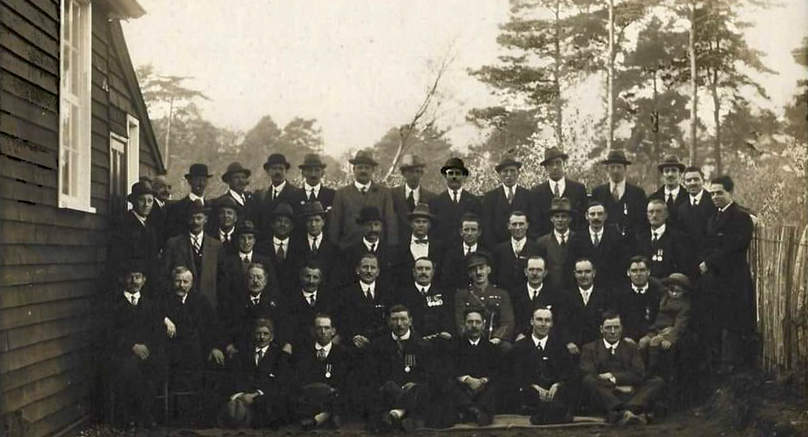
Club members in 1930
Origins of the Club
The Sunninghill Comrades began as the Comrades of the Great War (Sunninghill Branch), a local unit of a national organisation that operated under the jurisdiction of “Divisional H.Q.” in Reading. The inaugural meeting took place on September 16, 1919, likely held in the Cordes Hall, Sunninghill.
Committee Formation
At that first meeting, the committee was formed, it included the Vicar, A former Sergeant, local business owners and residences.
Interestingly, the title of Chairman was initially held by the Commandant, underscoring the military origins of the organisation.
The committee convened weekly, starting on September 23, 1919, in the Cordes Hall, the committee was tasked with raising funds for the establishment of a local headquarters to serve as a social hub for comrades.
Among the early activities, the committee organised fundraising events, including subscriptions, concerts, and whist drives. A significant resolution made on January 23, 1920, was to offer £240 to Mr. Gwilliam for a plot of land previously owned by Mr. Woolatt, indicative of the community’s commitment to establishing a permanent space.
Establishing the Club
On February 26, 1920, the formal establishment of the club took place. The minutes of this meeting stated:
“Its object is to provide social interactions for its members and to further that comradeship which sprang up whilst serving their country.”
The club was designed for the exclusive use of servicemen and their descendants, reinforcing the social bonds formed during wartime service.
Key decisions in subsequent meetings included discussions on heating and securing a piano for the club. By November 21, 1920, the committee held their first meeting on the actual club premises, marking a significant milestone in the development of the club’s physical presence.
The official opening took place on Boxing Night, December 26, 1920, featuring performances from both local talents and professional entertainers.
The Sunninghill Comrades has since continued to thrive as a supportive community hub. We honor the dedication of our founding members and all who have contributed to the legacy of the club over the years.
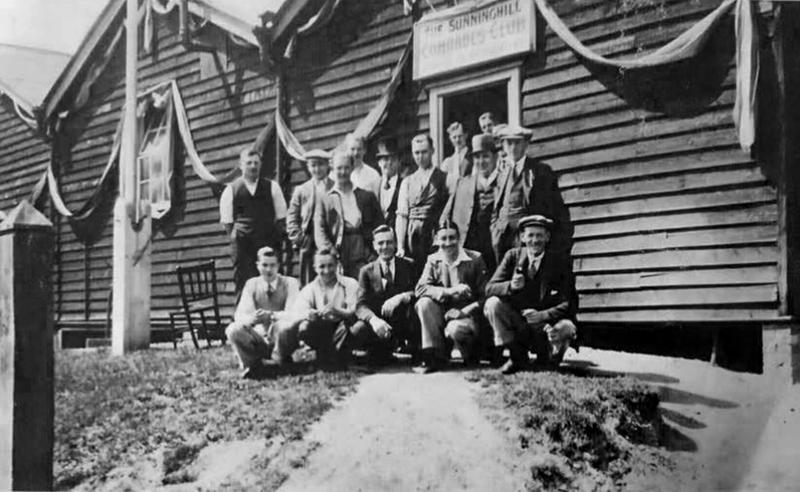
Facilities
The club offers darts, snooker (3 tables) and pool. Two large rooms with seating and tables, a sports bar with large screen TV, a snug, and an outside garden area with seating. The club also has parking available.
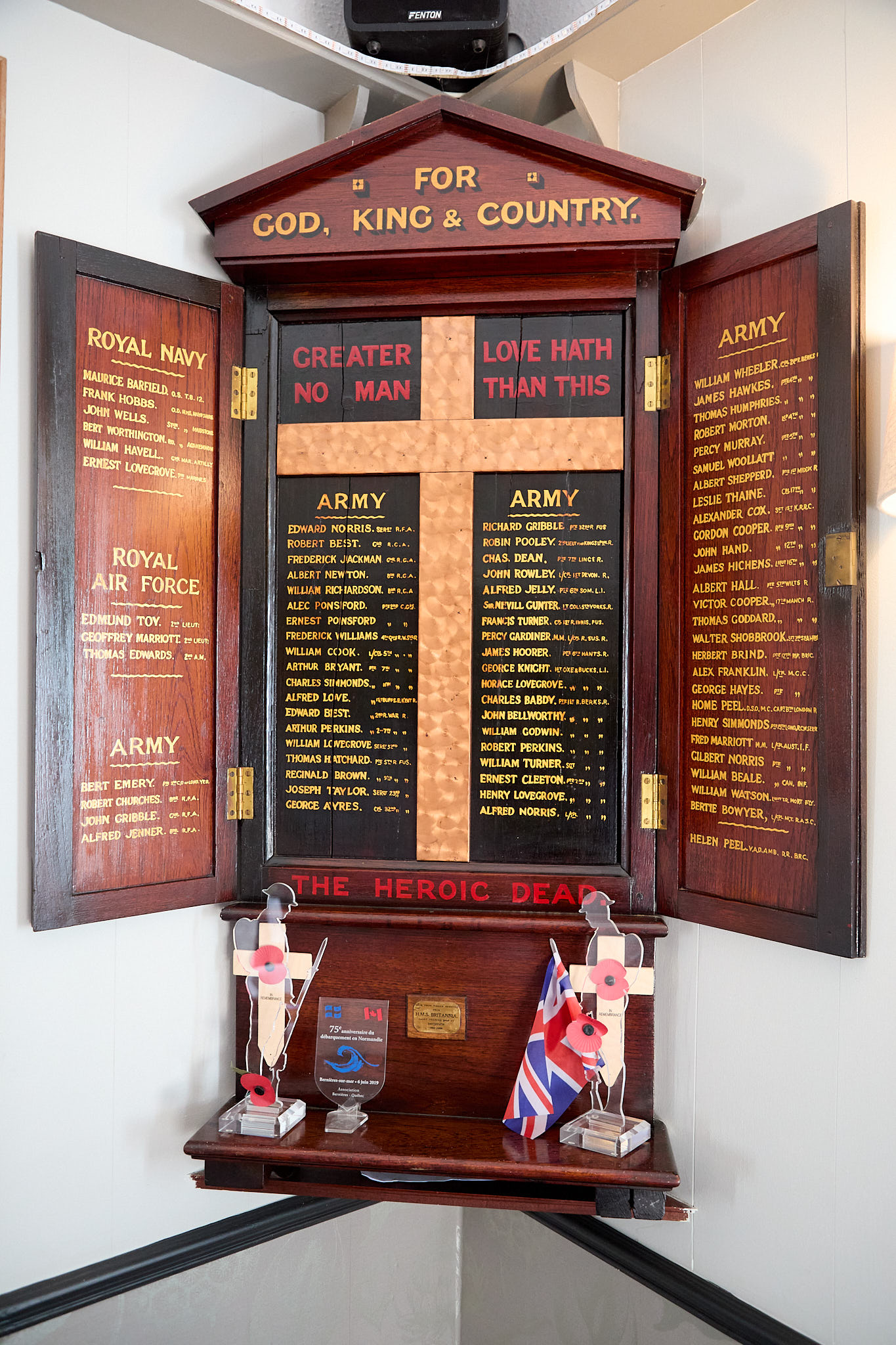
Click on the image to see a larger version
Memorial
For God, King and Country
The following names are listed on the memorial in the club.
World War II
(side panel left)
Royal Navy
Maurice Barfield, Frank Hobbs, John Wells, Bert Worthington, William Havel, Ernest Lovegrove.
Royal Airforce
Bert Emery, Robert Churches, Alfred Jenner
(Side panel right)
Army
William Wheeler, James, Hawkes, Thomas Humphries, Robert Morton, Percy Murray, Samuel Woollatt, Albert Shepperd, Leslie Thaine, Alexander Cox, Gordon Cooper, John Hand, James Hitchens, Albert Hall, Victor Cooper, Thomas Goddard, Walter Shobbrook, Herbert Brind, Alex Franklin, George Hayes, Home Peel, Henty Simmonds, Fred Marriott, Gilbert Norris, William Beale, William Watson, Bertie Bowyer.
Helen Peel
World War 1
(Left hand panel)
Edward Norris, Robert Best, Frederick Jackman, Albert Newton, William Richardson, Alec Ponsford, Ernest Ponsford, Frederick Williams, William Cook, Arthur Bryant, Charlie Simmonds, Alfred Lowe, Edward Best, Arthur Perkins, William Lovegrove, Thomas Hatchard, Reginal Brown, Joseph Taylor, George Ayres
(Right hand panel)
Richard Gribble, Robin Pooley, Chas. Dean, John Rowley, Alfred Jelly, Sir Neville Gunter, Francis Turner, Percy Gardiner, James Hoorer, George Knight, Horace Lovegrove, Charles Babdy, John Bellworthy, William Godwin, Robert Perkins, William Turner, Ernest Cleeton, Henry Lovegrove, Alfred Norris
Next: Gallery